Machine guarding plays an important role in workplace safety, but knowing where to install a guard is only part of the responsibility.
Industrial facilities use machinery with moving parts, cutting tools, and other hazards that can cause serious injuries. OSHA requires employers to protect workers from those dangers, whether they operate equipment directly or work nearby.
Understanding OSHA machine guarding requirements can help manufacturers identify safety gaps, choose appropriate safeguards, and protect employees during daily operations.
What Does OSHA Require for Machine Guarding?
OSHA outlines its general machine guarding requirements under 29 CFR 1910.212. The standard requires employers to use one or more guarding methods to protect workers from machine hazards.
OSHA identifies several hazards that require attention, including:
- Points of operation where machines perform work on materials
- Ingoing nip points where moving parts can catch or pull in clothing or body parts
- Rotating components that create contact hazards
- Flying chips and sparks produced during machine operations
The regulation also requires guards to stay securely attached to machinery when possible. Guards must not create additional hazards for employees.
However, OSHA does not require every machine to use the same type of guard. Manufacturers must consider the equipment, the hazards involved, and how employees interact with the machine.
Machine Guarding Must Address More Than the Obvious Hazards
A machine may have a guard around its main cutting area while leaving other dangerous components exposed.
Consider a conveyor system that moves products between workstations. Employees may face hazards near drive components, rollers, and other moving parts. Protecting only the most visible area may leave workers exposed elsewhere.
Manufacturers should examine the full machine and the tasks employees perform around it.
OSHA machine guarding requirements apply to hazards created by moving machinery, not simply to equipment that appears dangerous. A machine may need several safeguards to address different points of exposure.
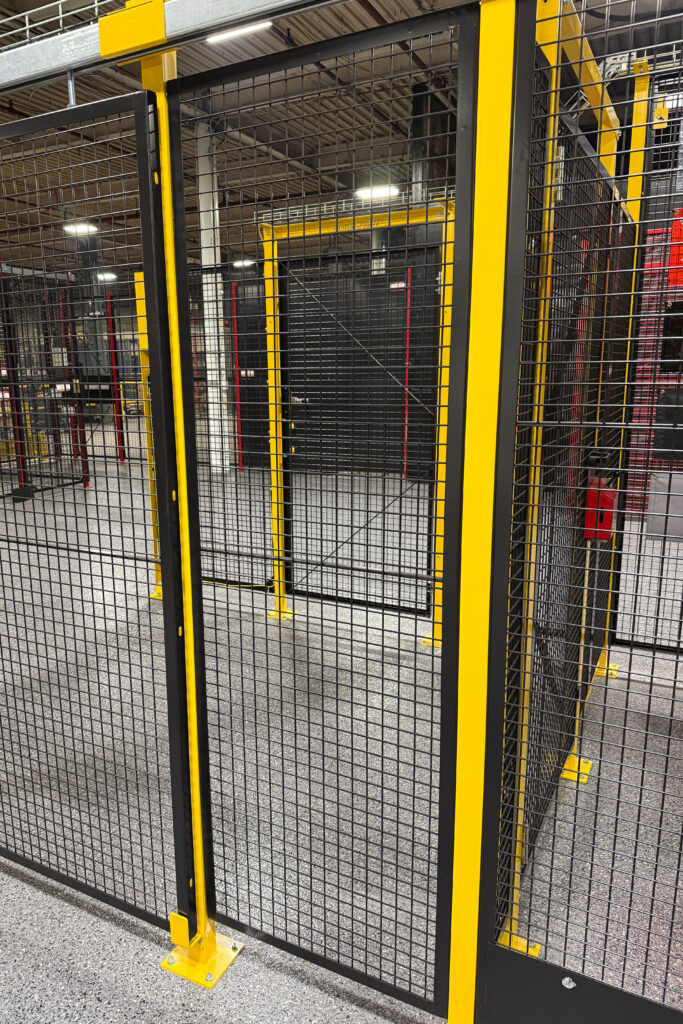
RapidGuard® II Machine Guarding from WireCrafters provides a modular perimeter guarding option for industrial equipment. Manufacturers can use the system around robotic cells, conveyors, palletizers, and other automated machinery when physical separation is appropriate.Wire mesh panels help separate employees from hazardous areas while maintaining visibility into the guarded space.
A Guard Must Work During Normal Production
Installing a barrier does not automatically mean a facility has addressed every machine safety concern.
Imagine an operator who must enter a guarded area several times during a shift. If the guard blocks necessary access, employees may feel tempted to remove it or find another way around it.
A better approach considers how the machine operates before selecting the guarding system.
Fixed guards can work well where employees rarely need access to hazardous components. Equipment that requires frequent entry may benefit from properly designed interlocked doors or other protective measures.
WireCrafters offers hinged and sliding door options for RapidGuard® II, along with available safety switches and interlocks. When properly integrated with machine controls, an interlocked guard can help prevent hazardous operation while an access door remains open.
The right arrangement depends on the machine and its operating conditions. Employers must also ensure that workers cannot easily bypass the safeguards.
What Should Manufacturers Check Before an OSHA Inspection?
A machine guarding review should go beyond confirming that guards are present.
Walk through the production area and observe how employees use each machine. Look for exposed moving parts, gaps around barriers, and areas where workers can reach hazardous components.
Pay attention to tasks outside normal production. Setup, cleaning, troubleshooting, and maintenance can create different exposure risks.
During the review, consider whether:
- Guards prevent employees from reaching hazardous moving parts.
- Workers can remove or bypass safeguards during operation.
- Doors and access points have appropriate protective measures.
- Guard placement accounts for possible reach-through, reach-over, and reach-around hazards.
- Employees understand the procedures for safely accessing equipment.
Manufacturers should also review their lockout/tagout procedures. Machine guarding protects employees during normal operations, while OSHA’s hazardous energy control requirements address covered servicing and maintenance activities.
A safety interlock does not automatically replace lockout/tagout when hazardous energy control is required.
Machine Guarding Requirements Do Not End After Installation
Production environments change, and a guarding system that worked during installation may no longer fit the operation.
A facility might add a conveyor, replace a robotic arm, or change the way employees load materials. Even a small adjustment can create a new exposure point.
Manufacturers should review machine safety whenever equipment, processes, or employee tasks change. Regular inspections can also identify damaged guards, missing hardware, or access points that no longer function as intended.
Modular guarding systems such as RapidGuard® II can accommodate many layout changes without requiring a completely new enclosure. However, any change to a guarded area should include a review of the hazards and protective measures.
The goal is to keep safety aligned with how employees actually use the equipment.
Make Machine Safety Part of Everyday Operations
Machine guarding should never become a task that gets attention only before an inspection.
Employees rely on properly designed safeguards every time they operate equipment, clear materials, or work near moving machinery. When manufacturers include guarding in equipment planning and routine safety reviews, they can identify problems before injuries occur.
Looking to improve machine safety in your facility? Contact our team or request a quote to discuss your project.
To learn more about WireCrafters, visit www.wirecrafters.com or follow us on YouTube, LinkedIn, Facebook, and Instagram.