Collaborative robots, or cobots, can work near people. That ability makes them useful for many automated tasks.
However, a cobot alone does not make every application safe.
The robot may handle sharp parts, heavy products, or other equipment. Its tools may also create hazards. A risk assessment should look at the full application before production begins.
In some cases, machine guarding may still play an important role.
Look Beyond the Cobot
Start with the complete robotic cell.
A cobot may have built-in safety features. However, the robot is only one part of the application.
Look at the end-of-arm tooling. Review the parts that the robot moves. Check nearby conveyors, machines, fixtures, and other equipment.
A gripper could create a pinch point. A sharp part could cause an injury. A nearby machine may also add a new hazard.
The risk assessment should account for every part of the process.
Understand How People Work Near the Robot
Cobots often operate close to employees. That does not mean workers need access to every part of the work area.
Review how people interact with the system.
Where does the operator stand? Where does the robot move? When does a worker need to enter the area?
Those questions can help identify where physical separation may make sense.
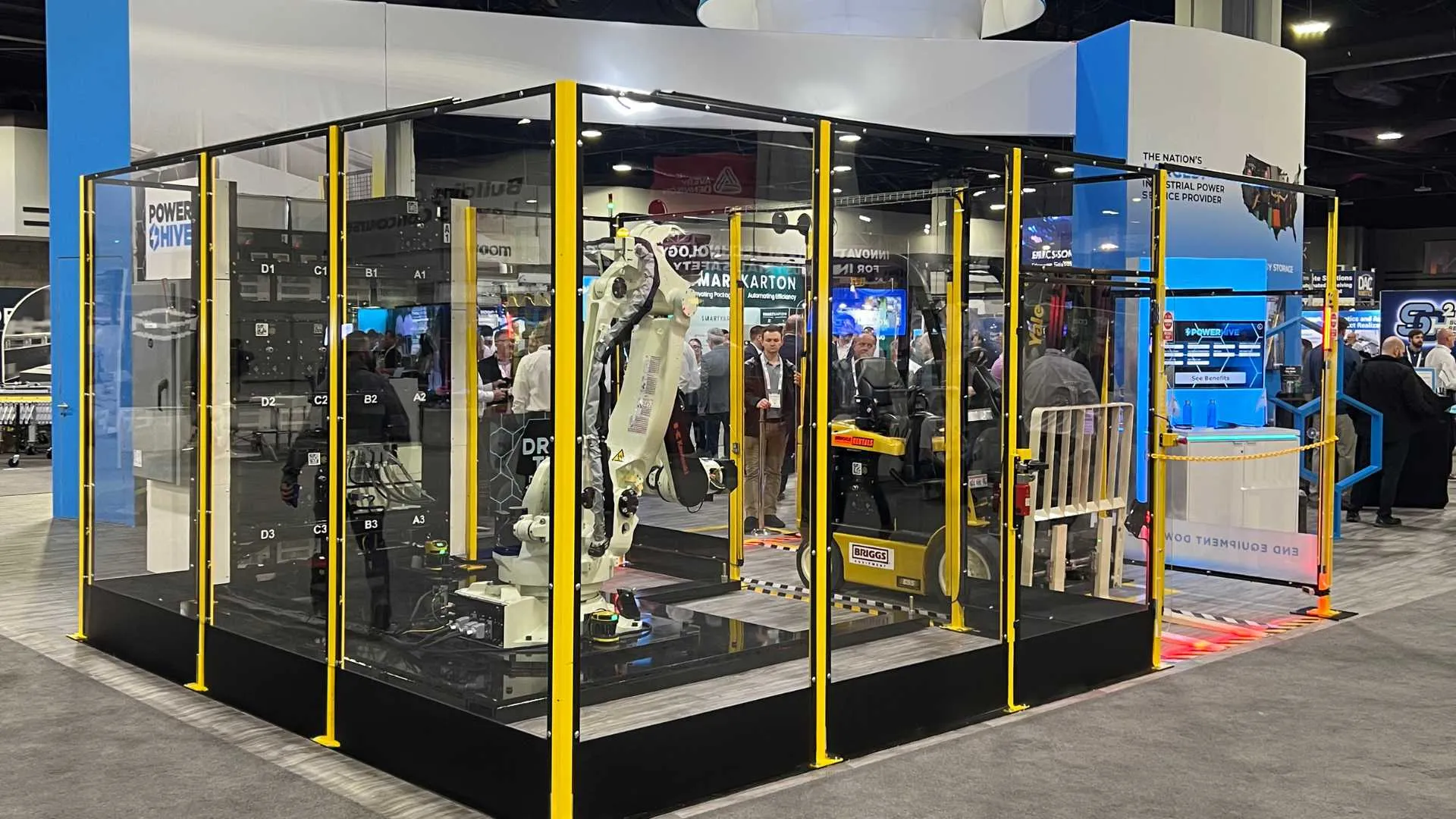
Know When a Barrier May Be Needed
Some collaborative applications can operate without a traditional perimeter guard. Others may need physical guarding around part or all of the system.
The decision depends on the hazards.
A barrier may help prevent workers from reaching a dangerous part of the cell. It can also help separate nearby foot traffic from automated equipment.
RapidGuard® II machine guarding can create a defined perimeter around robotic systems and other automated equipment.The wire mesh panels also maintain visibility into the work area.
Guard the Hazard, Not Just the Robot
The greatest risk may not come from the cobot arm.
End-of-arm tools can change an application’s safety needs. The same applies to the material that the cobot handles.
A cobot that moves a lightweight box presents different risks than one that handles a sharp metal part.
Other equipment can also affect the safety plan. Conveyors, presses, fixtures, and moving components may require their own safeguards.
Focus on the hazards created by the entire process.
Plan Access Into the Work Area
Employees may need to enter the robotic cell for setup, service, or other tasks.
A guarding system should account for those access needs.
RapidGuard® II offers hinged and sliding doors for guarded areas. You can also add safety switches or interlocks to doors when the application calls for them.
The safety system should match the task, equipment, and risk assessment results.
Consider Changes to the Cobot Application
One benefit of cobots is their ability to handle different jobs.
A facility may change the robot’s tool or move the system to a new process. Teams may also add conveyors or other equipment around it.
Each change can introduce new hazards.
Review the risk assessment when the application changes. Guarding may also need an update to match the new setup.
A modular system can make those changes easier. RapidGuard® II panels can adapt to different layouts as automation needs evolve.
Build Safety Around the Entire Cobot Application
Cobot safety starts with understanding how the complete system works.
Review the robot, tooling, materials, nearby equipment, and employee tasks. Then choose safeguards based on the risks you find.
Some applications may rely on the safety functions built into the collaborative system. Others may benefit from physical machine guarding as part of a broader safety plan.
If your cobot application needs physical guarding, contact our team to discuss your layout or request a quote for RapidGuard® II.
To learn more about WireCrafters, visit www.wirecrafters.com or follow us on YouTube, LinkedIn, Facebook, and Instagram.