Not every machine needs the same type of guard. A conveyor, robotic cell, and cutting equipment can pose very different safety challenges, even in the same facility.
Choosing the right machine guard starts with understanding how the equipment operates and where employees may face hazards. The goal is to protect workers without creating unnecessary production obstacles.
Manufacturers have several machine guarding options, but the best choice depends on the equipment, the risks involved, and how often employees need access.
Start With the Machine, Not the Guard
Before comparing machine guarding systems, look closely at the equipment itself.
Moving parts, rotating components, and points of operation can create hazards during normal production. Employees may also face risks when loading materials, clearing jams, or making adjustments.
A machine risk assessment helps identify where workers could come into contact with dangerous areas. It should consider more than the operator’s position. Maintenance employees, nearby workers, and anyone entering the work area may be exposed.
For example, a conveyor may need protection around its drive components and other moving parts. A robotic cell may require a larger guarded area because the robot moves through a defined operating space.
Understanding those differences helps manufacturers narrow their options before selecting a machine guard.

Which Type of Machine Guard Makes Sense?
Machine guards serve different purposes, and no single design works for every application. Understanding the available options can help manufacturers select a solution that fits their equipment and daily operations.
Fixed machine guards create a physical barrier that stays in place during normal operation. They often work well around machine components that employees rarely need to access. A fixed guard can prevent contact with moving parts without requiring employees to interact with it during production.
Interlocked machine guards work with machine controls to restrict hazardous operation when an access point opens. They may be a better fit for equipment that requires regular entry for loading, adjustments, or other tasks. Well-designed interlocks protect employees while allowing necessary access.
Adjustable machine guards allow workers to change the guard opening to accommodate different materials or operations. Manufacturers may use them on certain machines that handle workpieces of varying sizes. However, employees must adjust the guards correctly to maintain protection.
Perimeter guarding separates employees from a larger hazardous work area rather than a single machine component. Manufacturers often use perimeter guarding around robotic cells, conveyors, palletizers, and automated equipment.
Some applications may need more than one safeguarding method. For example, a facility might use fixed panels around an automated work cell and an interlocked door where employees need access.
WireCrafters RapidGuard® II offers a modular perimeter guarding option for many industrial applications. The system uses wire mesh panels to separate employees from hazardous equipment while maintaining visibility into the work area.Think About How Employees Access the Equipment
A guard can provide strong physical separation and still create problems if employees cannot complete their work efficiently.
Consider a machine that requires frequent material changes or routine adjustments. A fully enclosed area with limited access may slow the process or encourage employees to work around the guard.
Manufacturers should look at how often employees need entry, where they approach the machine, and what tasks they perform inside the guarded area.
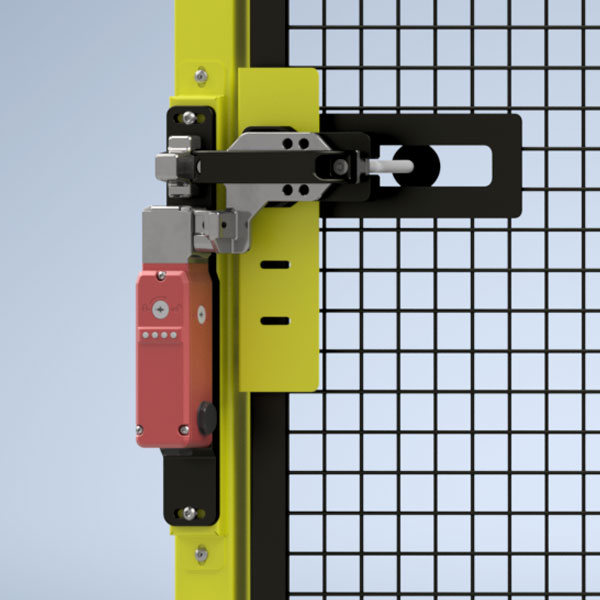
Door placement can make a difference. Hinged or sliding doors may provide access without requiring employees to remove large sections of guarding.
RapidGuard® II offers door options and available safety interlocks that can support access requirements. When properly integrated with machine controls, interlocks help prevent hazardous operation while an access door remains open.
However, safety interlocks do not automatically replace lockout/tagout procedures during covered maintenance and servicing tasks.
Guard Placement Matters as Much as Guard Type
Choosing the right machine guard involves more than selecting panels and doors. Manufacturers must also consider where the guard will sit in relation to the hazard.
A barrier too close to moving equipment may still let someone reach a dangerous area. Gaps near the floor, around doors, or between panels can also create exposure risks.
OSHA’s general machine guarding standard, 29 CFR 1910.212, requires employers to protect workers from hazards such as rotating parts, ingoing nip points, and points of operation.
Proper safety distances depend on the hazard, guard design, opening size, and applicable safety standards. A risk assessment can help guide those decisions.
Wire mesh guarding provides visibility, but manufacturers must select the proper mesh openings and guard location for the application.
Plan for the Equipment You Have and the Changes Ahead
Production equipment rarely stays the same throughout its service life.
A facility may add a conveyor, expand a robotic work cell, or change how materials move through an automated system. Those adjustments can affect the guarding layout and the hazards employees face.
Modular machine guarding can offer more flexibility than a system built for one fixed arrangement.
RapidGuard® II uses modular panels that manufacturers can configure around different equipment layouts. Facilities can also adjust many configurations when production needs change.
Still, every modification should include a review of the machine’s hazards. A new layout may require different guard placement, access points, or protective measures.
Choose a Guard That Fits the Work
The best machine guard does more than separate employees from moving equipment. It fits the way people operate, maintain, and work around the machine.
A well-planned guarding system allows manufacturers to address safety concerns without making everyday tasks unnecessarily difficult. Taking the time to understand the application can also help avoid costly changes after installation.
Need help finding the right guarding solution for your equipment? Contact our team or request a quote to discuss your application.
To learn more about WireCrafters, visit www.wirecrafters.com or follow us on YouTube, LinkedIn, Facebook, and Instagram.