Machine guarding and lockout/tagout both help protect workers from machine hazards. However, they serve different roles.
Machine guarding helps protect workers while equipment performs its normal job. Lockout/tagout, or LOTO, controls hazardous energy during certain service and maintenance tasks.
Knowing the difference can help teams build a stronger machine safety plan.
What Is Machine Guarding?
Machine guarding helps keep workers away from moving parts and other hazards.
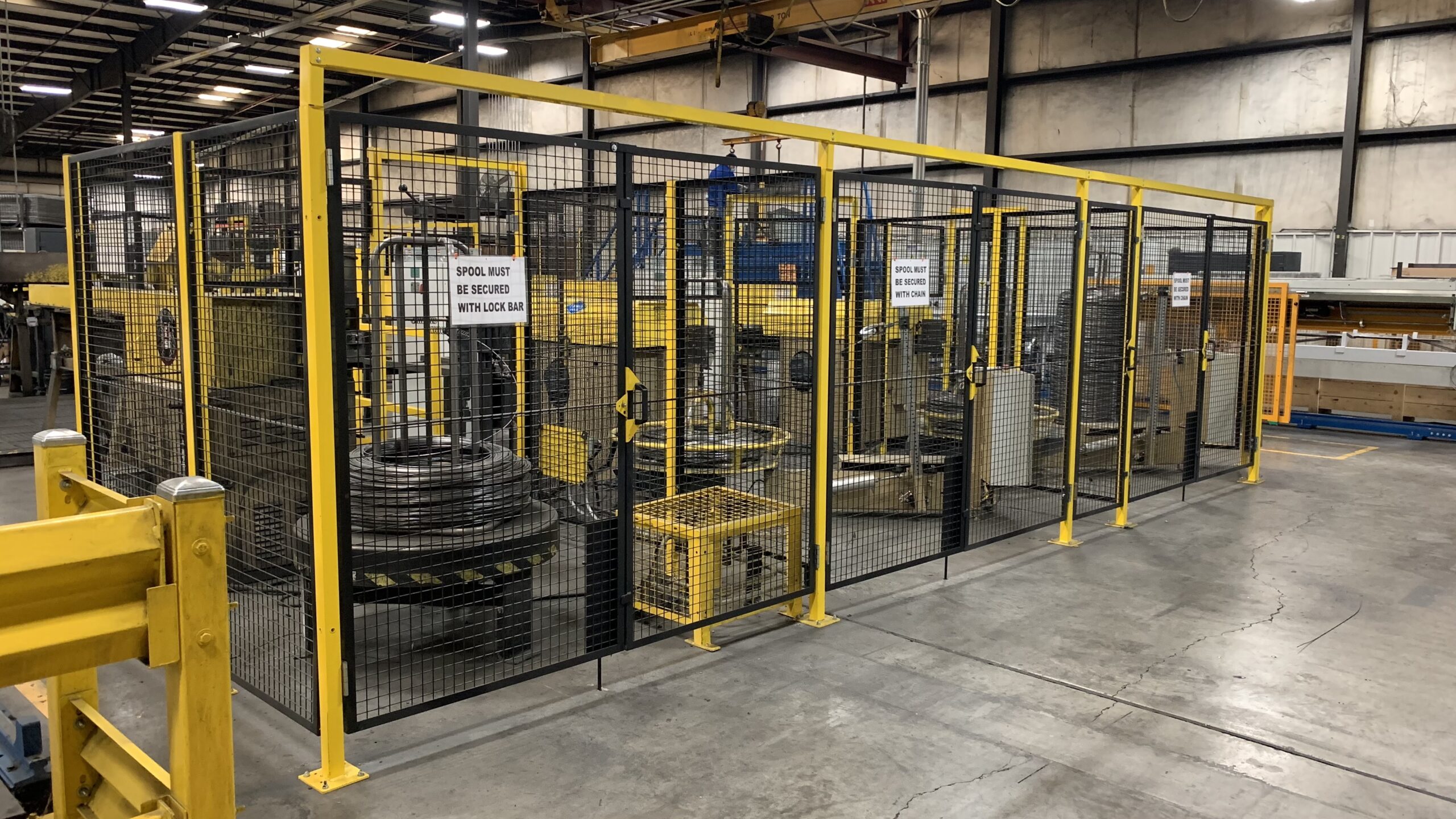
Guards may protect points of operation, rotating parts, and other dangerous areas. They can also create distance between workers and automated equipment.
For example, RapidGuard® II can form a perimeter around robots, conveyors, palletizers, and other machinery.
The wire mesh panels keep the equipment visible while limiting access to the danger zone.
What Is Lockout/Tagout?
Lockout/tagout focuses on hazardous energy.
OSHA’s lockout/tagout standard applies to certain service and maintenance tasks. These tasks may expose workers to an unexpected startup or the release of stored energy.
Energy can come from several sources. This may include electrical, mechanical, hydraulic, or pneumatic systems.
A LOTO procedure isolates the equipment from its energy sources before covered work begins.
When Does Machine Guarding Apply?
Machine guarding plays a key role during normal production.
Employees may work near equipment while it runs. A guard helps prevent them from reaching a hazard during that work.
The type of guard depends on the machine and its risks.
A fixed barrier may work for an area that needs little access. Other applications may need doors or gates for routine entry.
RapidGuard® II offers a modular way to build these guarded areas. Facilities can adjust the layout around the machine and the work area.
When Does Lockout/Tagout Apply?
The situation changes when workers perform service or maintenance.
A worker may need to clean, repair, inspect, adjust, or unjam equipment. Some tasks may require the worker to enter an area that the guard normally protects.
If the task exposes the worker to unexpected startup or hazardous energy, OSHA’s lockout/tagout requirements may apply.
Simply stopping the machine is not the same as controlling its hazardous energy.
What Happens When a Guard Must Be Removed?
This is where the difference becomes clear.
A machine guard may protect an employee during normal production. However, maintenance may require a worker to remove or bypass that guard.
The worker can then face hazards that the barrier normally keeps out of reach.
OSHA requires lockout/tagout for covered service and maintenance work when an employee must remove or bypass a guard or enter certain danger zones.
In these cases, the guard and LOTO serve different parts of the safety process.
Where Do Interlocks Fit?
Some guarding systems use safety interlocks or gate switches at access points.
An interlock gate can work with the machine control system when someone opens the gate. This can add another layer of protection to a machine guarding system.
However, an interlock does not automatically replace lockout/tagout.
Teams still need to review the task and the hazards involved. If OSHA’s LOTO requirements apply, the employer must follow the required energy control procedures.
Build Safety Around the Task
Machine safety isn’t about choosing between a guard and a lock.
Start with the work being done.
During normal production, machine guarding can help keep workers separated from hazards; during covered service or maintenance, lockout/tagout controls hazardous energy before work begins.
Understanding that difference helps teams choose the right protection for each task.
If your facility needs physical guarding around industrial equipment, contact our team to discuss your application or request a quote for RapidGuard® II today.
To learn more about WireCrafters, visit www.wirecrafters.com or follow us on YouTube, LinkedIn, Facebook, and Instagram.