How to Ensure Your Facility is OSHA-Compliant for Machine Guarding
Machine guarding plays a major role in workplace safety, but many facilities treat it as a one-time project instead of an ongoing process. OSHA compliance requires more than installing a few barriers around equipment. Facilities need to evaluate hazards, control access, and maintain guarding systems as operations evolve.
A strong machine guarding strategy helps reduce injuries, protect employees, and support safer day-to-day operations across the floor.
Identify Where Hazards Exist
The first step toward OSHA compliance is understanding where employees face risk.
Machines with rotating parts, pinch points, cutting surfaces, or automated movement all require attention. Areas where employees load material, clear jams, or perform maintenance often pose the highest risk of injury.
Facility managers should walk the floor regularly and evaluate how employees interact with equipment during normal operation, setup, and service work.
Install Guarding That Matches the Application
Different machines require different types of protection. A guarding system that works for one application may not fit another.
Our RapidGuard® II machine guarding systems help facilities build custom guarding layouts around robotic cells, conveyors, presses, and automated equipment. Teams can configure panels and doors to fit the equipment footprint while maintaining visibility into the process.
This flexibility allows facilities to address hazards without disrupting production flow.
Control Access Around Machinery
OSHA machine guarding requirements focus heavily on preventing employees from reaching hazardous areas during operation.
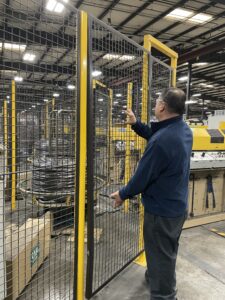
Our guarding systems include hinged and sliding doors that can integrate with safety interlocks and gate switches. These devices help stop the equipment when a door opens, reducing the risk of contact with moving parts.
By controlling how employees enter guarded areas, facilities strengthen both safety procedures and compliance efforts.
Protect More Than Just the Machine
Machine hazards often extend beyond the equipment itself. Nearby work areas, walkways, and staging zones can expose employees to unnecessary risk if they sit too close to active machinery.
Our wire partition systems help facilities create additional separation around production equipment. Teams can establish controlled zones, direct pedestrian traffic, and limit access near automated processes.
This layered approach improves organization while supporting safer movement throughout the facility.
Maintain Visibility and Awareness
Employees and supervisors need to monitor equipment without entering hazardous areas.
Wire mesh guarding allows teams to maintain clear sightlines into machine cells and work zones. Operators can observe production, identify issues, and communicate with nearby employees while staying outside restricted areas.
This visibility helps facilities maintain safer operations without sacrificing efficiency.
Keep Guarding Systems Maintained
Compliance does not stop after installation. Damaged panels, disabled interlocks, or unsecured doors can create serious safety concerns over time.
Facilities should regularly inspect guarding systems and address issues as soon as they arise. Teams should also review layouts whenever equipment changes or production lines shift.
Consistent maintenance helps ensure guarding continues to perform as intended.
Build Safety Into Daily Operations
OSHA compliance starts with creating an environment where employees can work safely around machinery every day.
Our RapidGuard® II machine guarding and wire partition systems help facilities reduce exposure to hazards, manage access around equipment, and support long-term safety goals across the floor.
To learn more about machine guarding solutions for your facility, contact a member of our team or request a quote today.
To learn more about WireCrafters, visit www.wirecrafters.com or follow us on YouTube, LinkedIn, Facebook, and Instagram.