Each year, OSHA releases its list of the Top 10 Most Frequently Cited Standards, and machine guarding remains near the top of the list. Despite decades of awareness, training, and advancements in safety technology, violations related to inadequate guarding persist as a significant issue across many industries. Understanding why this standard remains a challenge can help facilities identify the underlying causes and take proactive steps to enhance compliance and worker safety.
A Closer Look at OSHA’s Data
Machine guarding violations consistently rank within the top ten on OSHA’s annual list, often alongside lockout/tagout, hazard communication, and respiratory protection. According to recent data compiled by OSHA and safety analytics firm VelocityEHS, machine guarding citations remain one of the most common safety issues in manufacturing, warehousing, and processing environments.
These violations typically reference OSHA Standard 1910.212, which covers the general requirements for all machinery. The most common issues include:
- Missing or inadequate guards at the point of operation.
- Unprotected rotating parts or shafts.
- Improperly adjusted or removed guards during maintenance.
- Lack of consistent inspection or hazard assessment processes.
The data show that many of these violations occur not because employers are unaware of the requirement, but because the necessary controls are not adequately maintained, standardized, or enforced.
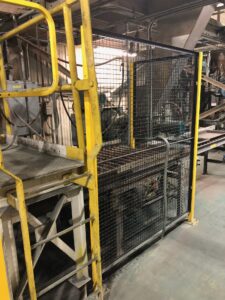
What Types of Violations Dominate
While OSHA citations can vary by industry, several patterns are seen across most sectors:
- Point-of-Operation Exposure: Machines that cut, shear, or form materials often have unguarded or poorly guarded operational areas, leaving workers exposed to potential injury.
- Rotating and Moving Parts: Shafts, belts, pulleys, and couplings that are not enclosed or shielded are a frequent cause of citations.
- Improper Guard Removal: Guards that are removed for maintenance and never reinstalled continue to be a major contributor to violations.
- Lack of Training or Signage: Workers may not recognize when a machine is unsafe to operate, leading to unintentional exposure to hazards.
Even a single unguarded component can result in serious injuries such as amputations, fractures, or lacerations. These risks underline why OSHA maintains such a strong emphasis on proper guarding practices.
Root Causes Behind Recurring Violations
If machine guarding requirements are well known, why do violations continue to occur? The answer usually lies within three main categories: design, maintenance, and procedural gaps.
1. Design and Equipment Age
Many facilities still operate older equipment that was not originally manufactured with guarding in mind. These machines often require custom or retrofitted guards to meet current standards. Modern guarding systems, such as our RapidGuard® II, make it easier to retrofit existing machinery while maintaining accessibility and ensuring compliance. The challenge comes when facilities delay upgrades or rely on makeshift barriers that do not meet OSHA’s specifications.
2. Maintenance and Upkeep
Even well-designed guarding systems can become ineffective if not properly maintained. Guards that are removed for cleaning or repair must be reinstalled before a machine is operated again. Routine inspections should be documented, and worn or damaged guards must be replaced promptly. Neglecting these steps often leads to recurring citations and preventable injuries.
3. Training and Procedural Gaps
Training is one of the most common weaknesses in machine safety programs. Workers must understand not only how to operate machinery safely but also why guards are necessary. Supervisors should ensure that no machine is used without its protective barriers in place and that any modifications follow established safety procedures. Consistent training and accountability help close the gap between written policy and everyday practice.
Creating a Culture of Prevention
Compliance with OSHA 1910.212 should not be viewed as a box to check but as a key component of operational excellence. A proactive approach begins with a complete assessment of existing equipment, followed by corrective actions that address both physical and procedural risks. Modular guarding systems, clear signage, and well-documented training programs all contribute to reducing citations and injuries.
At WireCrafters, we design and manufacture machine guarding solutions that meet or exceed OSHA standards. Our products are engineered for flexibility, enabling facilities to enhance safety without compromising productivity. Whether you are updating older equipment or setting up a new production line, the right guarding system helps protect both your people and your business.
Take the next step toward compliance.
Contact us today or request a quote to discover how our guarding systems can help your facility minimize risk and maintain OSHA compliance.
To learn more about WireCrafters, visit www.wirecrafters.com or follow us on YouTube, LinkedIn, Facebook, and Instagram.