Safety Considerations When Integrating Automation into Your Facility
Automation continues to transform manufacturing and warehouse operations. From collaborative robots to fully automated production lines, companies use new technologies to improve efficiency, increase throughput, and address labor challenges. As automation expands, facilities must also closely examine how these systems affect workplace safety.
Successful automation projects do more than improve productivity. They also create an environment where employees can work safely alongside machines and automated processes.
Understand the Risks Before Installation
Every automation project introduces new interactions between people and equipment. Before installation begins, facilities should evaluate how employees, materials, and machinery will move through the space.
A robotic cell may require restricted access, while an automated conveyor system may create new pedestrian crossing points. Identifying these challenges early helps prevent safety issues from developing after equipment goes live.
The goal is to design safety into the process from the start rather than adding it later.
Evaluate Collaborative Robot Applications Carefully
Collaborative robots, often called cobots, have become increasingly common in manufacturing environments. These systems allow humans and robots to work in closer proximity than traditional industrial robots.
While cobots include built-in safety features, facilities should not assume they eliminate all risks. Payload, speed, reach, and application requirements all affect the level of protection needed.
Facilities should assess each application individually and determine whether additional barriers, guarding, or controlled access points would improve overall safety.
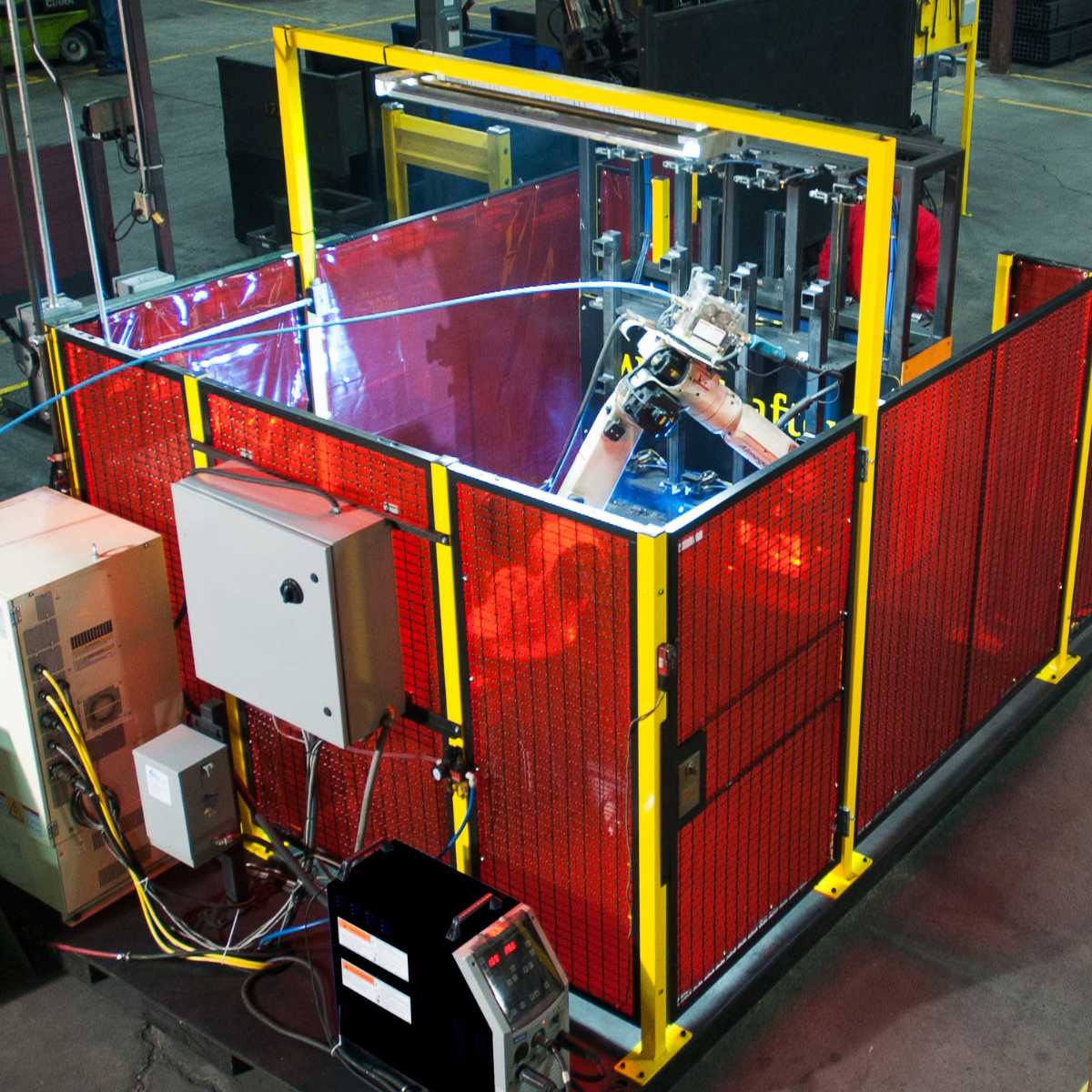
Protect Automated Equipment with Proper Guarding
Many automated systems operate at speeds and force levels that require physical separation between employees and machinery.
Our RapidGuard® II machine guarding systems help facilities establish secure boundaries around robotic cells, conveyors, palletizers, and automated production equipment. Teams can configure guarding layouts to match the equipment’s footprint while maintaining visibility into the process.
Facilities can also incorporate safety interlocks and gate switches that stop equipment when access doors are opened, helping support safer maintenance and troubleshooting procedures.
Use Safety Fencing to Define Work Zones
Automation often changes how employees move throughout a facility. Without clearly defined boundaries, workers may unknowingly enter areas where equipment is operating.
Safety fencing provides structure around automated processes and guides traffic throughout the facility.
Our wire mesh guarding systems allow facilities to separate active automation zones from surrounding operations while maintaining clear sightlines. Employees can monitor equipment activity without entering restricted areas, improving both safety and operational awareness.
Plan for Future Growth
Automation projects rarely stop with a single machine or process. Many facilities continue adding equipment as production demands increase.
When selecting guarding and fencing solutions, flexibility matters. Modular systems allow facilities to expand or reconfigure layouts without replacing entire guarding systems.
This adaptability helps companies maintain consistent safety standards as operations evolve.
Building a Safer Automated Facility
Automation delivers significant benefits, but every new system should include a thoughtful safety strategy. Evaluating risks, properly guarding equipment, and establishing clear boundaries around automated processes all contribute to a safer work environment.
Our RapidGuard® II machine guarding systems help facilities integrate automation while protecting employees and supporting efficient operations.
To learn more about machine guarding solutions for automated environments, contact a member of our team or request a quote today.
To learn more about WireCrafters, visit www.wirecrafters.com or follow us on YouTube, LinkedIn, Facebook, and Instagram.