Safety and Regulatory Compliance in Robotics and Automation: Best Practices for Safe Industrial Automation Deployment
By Erik B. Johnson
Director of Innovation, WireCrafters
Robotics and automation continue to transform manufacturing, warehousing, and distribution operations. From industrial robots and autonomous mobile robots (AMRs) to automated storage and retrieval systems (AS/RS) and advanced conveyor technologies, organizations are leveraging these technologies to improve productivity, increase efficiency, and address ongoing workforce challenges.
As automation adoption accelerates, safety and regulatory compliance have become increasingly important considerations. While new technologies offer significant operational advantages, successful automation deployments require more than innovative equipment—they depend on thoughtful risk assessment, adherence to recognized standards, and a commitment to protecting workers throughout the lifecycle of an automated system.
Industry organizations such as The Robotics Group (TRG), a member community of MHI, play an important role in helping manufacturers, integrators, and technology providers navigate these challenges by providing education, industry collaboration, and discussions around emerging technologies, standards, and best practices.
Safety Begins Long Before Startup
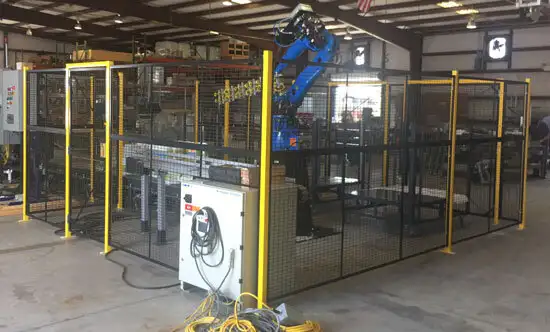
One of the most common misconceptions about automation safety is that it can be addressed at the end of a project. Safety is most effective—and most economical—when it is integrated into the earliest stages of planning and system design.
Risk assessments help organizations identify hazards, evaluate potential consequences, and determine appropriate risk reduction measures during the design, integration, operation, and maintenance of automated systems.
Leading organizations recognize that safety is not a final project milestone but an ongoing process that influences equipment selection, system architecture, facility layout, maintenance procedures, and employee training. By identifying risks early, companies can often avoid costly retrofits, reduce project delays, and improve overall system performance.
As automation systems become more sophisticated and interconnected, periodic reassessment becomes equally important. Equipment modifications, software updates, process changes, and facility expansions can introduce new risks that should be evaluated to ensure existing safeguards remain effective. Robust management of change (MOC) processes help organizations systematically review these changes, assess potential impacts on safety, and verify that risk reduction measures remain appropriate as systems evolve.
Understanding the Regulatory and Standards Landscape
Automation safety is guided by a combination of government regulations, consensus standards, and industry’s best practices. While specific requirements vary by region and application, the objective remains consistent: identifying hazards, reducing risk, and enabling safe interaction between people and automated systems.
In the United States, OSHA establishes workplace safety requirements, while system designers, manufacturers, and integrators frequently rely on consensus standards to guide machine design and risk reduction efforts.
Among the most widely referenced standards is ANSI B11.0, which provides a framework for hazard identification, risk assessment, and risk reduction throughout a machine’s lifecycle.
For robotic applications, ANSI/A3 R15.06-2025 serves as a foundational reference. The standard incorporates the requirements of ISO 10218-1:2025 and ISO 10218-2:2025, helping align North American and international approaches to industrial robot safety.
Understanding these standards is increasingly important as organizations deploy larger fleets of robots, implement collaborative robotic applications, and adopt more complex automation architectures across multiple facilities.
Emerging Technologies Are Raising New Safety Questions The pace of innovation in automation continues to accelerate.
Collaborative robotic applications, autonomous mobile robots (AMRs), AI-enabled systems, and emerging humanoid robotics platforms are creating new opportunities for operational efficiency while introducing new considerations for safety professionals, engineers, and facility operators.
Many of these technologies are designed to operate in closer proximity to people than traditional industrial automation. As a result, organizations must carefully evaluate how workers interact with automated systems, how changes are managed over time, and how risk assessments evolve alongside technology.
The challenge is no longer simply making automation productive, it is ensuring that automation remains safe, compliant, and sustainable as technologies continue to evolve.
Safety Is a Continuous Commitment
Compliance is not achieved through documentation alone.
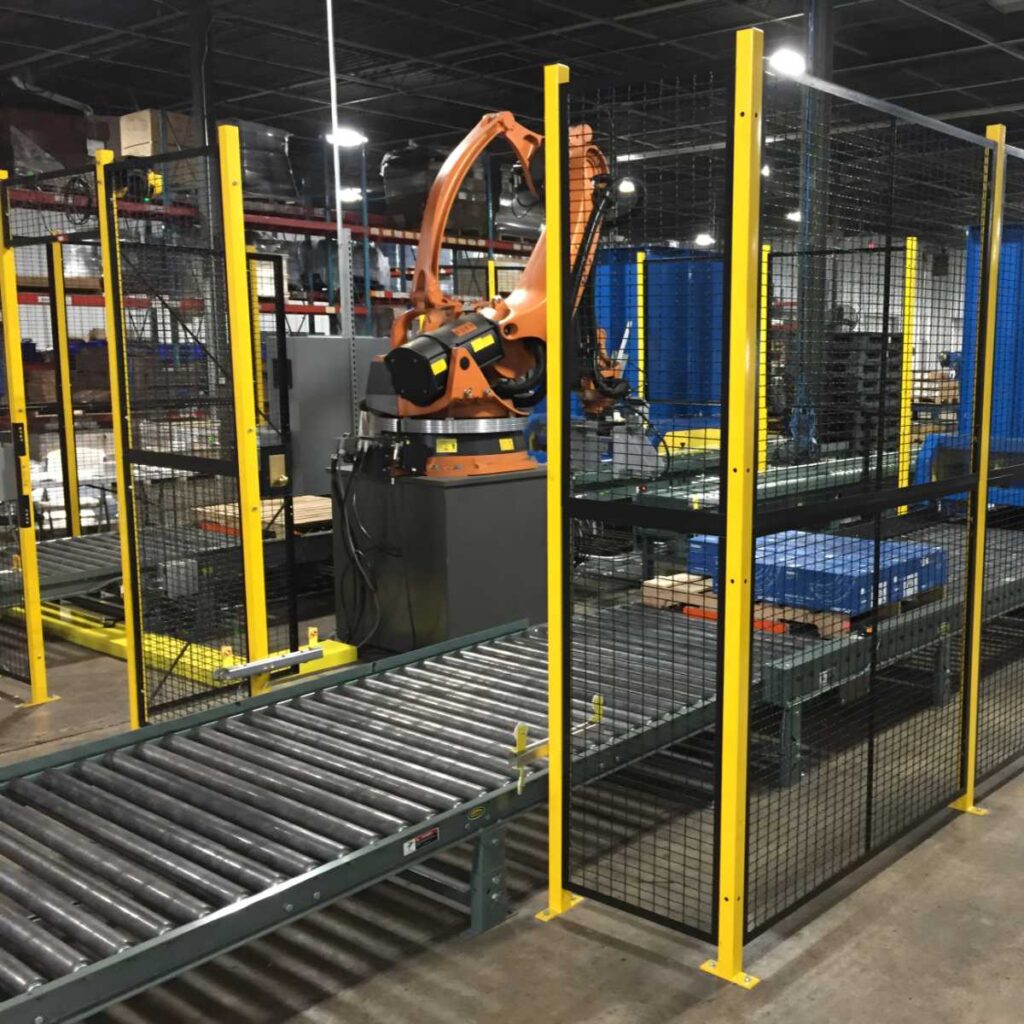
Organizations that consistently achieve strong safety performance establish operational practices that support long-term risk management. Employee training, preventive maintenance programs, management of change (MOC) procedures, incident reviews, and periodic system evaluations all contribute to safer operations. Effective MOC programs help ensure that modifications to equipment, software, processes, or operating procedures are properly evaluated before implementation, reducing the likelihood of unintended safety risks.
Successful organizations understand that safety is not a one-time project deliverable. It is a continuous commitment that extends throughout the operational life of an automated system.
Leveraging Industry Expertise and Collaboration
As automation technologies become more advanced, organizations increasingly benefit from collaboration with industry peers, standards experts, system integrators, and technology providers.
The Robotics Group (TRG), an industry community within MHI, provides a forum where automation stakeholders can exchange knowledge, discuss emerging trends, explore safety and standards developments, and learn from real-world implementation experiences.
Through educational programs, networking opportunities, industry research, and thought leadership initiatives, TRG helps organizations better understand both the opportunities and responsibilities associated with modern automation.
For companies seeking to stay informed on evolving safety standards, emerging technologies, and automation best practices, TRG serves as a valuable resource for ongoing learning and professional engagement.
Building a Safer Automated Future
Automation will continue to reshape industrial operations, delivering new levels of efficiency, flexibility, and competitiveness. Organizations that prioritize risk assessment, adhere to recognized standards, invest in workforce training, and embrace continuous improvement will be best positioned to realize these benefits safely.
As the industry moves forward, collaboration and knowledge sharing will remain essential. By working together and leveraging resources available through organizations such as The Robotics Group, automation professionals can help create environments where people and technology work together safely, effectively, and productively.
Learn more about The Robotics Group (TRG) and its educational resources, industry initiatives, and upcoming events at www.theroboticsgroup.org.
About the Author
Erik B. Johnson is Director of Innovation at WireCrafters and an automation professional with experience in robotics, material handling, and industrial automation. He is actively involved with The Robotics Group (TRG), an industry community of MHI, and is passionate about advancing safe, effective, and responsible automation adoption across manufacturing and supply chain operations.
To learn more about WireCrafters, visit www.wirecrafters.com or follow us on YouTube, LinkedIn, Facebook, and Instagram.