Protecting Workers in the Metal Fabrication Industry with Machine Guards
Metal fabrication environments move fast. Cutting, bending, welding, and forming all take place on the same floor, often simultaneously. With that level of activity comes real risk. Sharp edges, high heat, moving parts, and flying debris all create hazards that require consistent control.
Machine guarding plays a direct role in protecting workers from these risks. When facilities install the right barriers and safeguards, they create a safer environment without slowing down production.
Understanding the Risks on the Fabrication Floor
Metal fabrication introduces a wide range of hazards. Workers handle sharp materials, operate heavy machinery, and work around high-temperature processes every day. Equipment like press brakes, shears, and grinders can create pinch points, flying sparks, and cutting hazards if left unguarded.
OSHA requires facilities to guard any machine that could cause injury, including risks from rotating parts, flying debris, and points of operation. Without proper guarding in place, these hazards can lead to serious injuries such as cuts, burns, or even amputations.
Creating Separation Around Equipment
One of the most effective ways to reduce risk is to create a clear separation between workers and machinery.
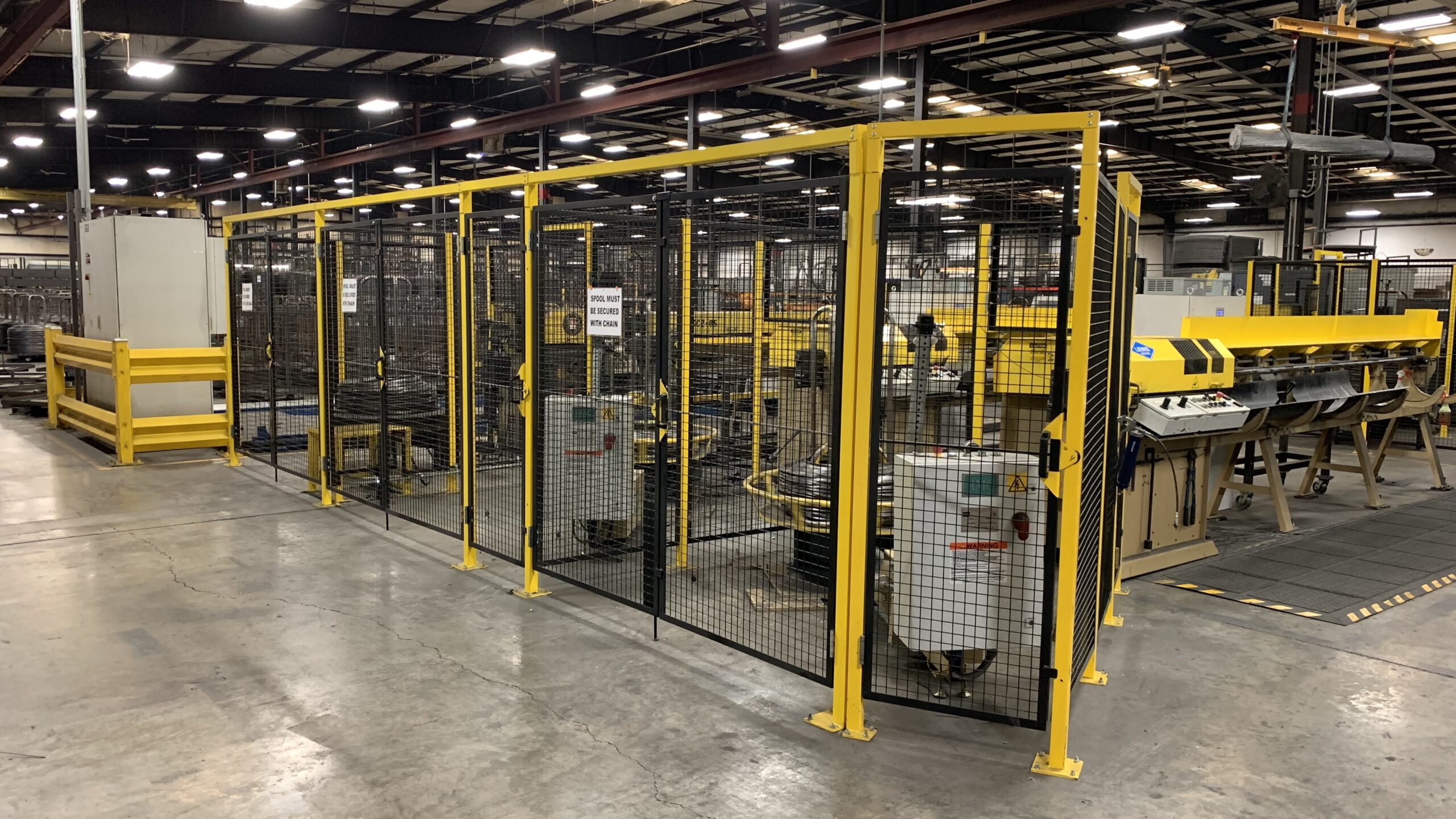
Our RapidGuard® II machine guarding systems allow facilities to build protective barriers around fabrication equipment, including robotic welding cells, cutting stations, and automated processes. These systems help keep operators safe while limiting access to dangerous areas.
Facilities can also integrate doors with safety interlocks, helping stop equipment when a gate is opened. This reinforces safe behavior and supports compliance with machine guarding requirements.
Controlling Sparks, Debris, and Exposure
Fabrication processes like welding and grinding generate sparks, chips, and debris that can travel beyond the immediate work area. Without proper containment, nearby workers remain exposed to these hazards.
Our machine guarding systems can incorporate panels, curtains, or custom configurations that help contain sparks and flying particles. This added layer of protection helps reduce the risk of eye injuries, burns, and other preventable incidents.
Wire mesh barriers also maintain visibility, allowing teams to monitor operations without stepping into hazardous areas.
Limiting Access to Active Work Zones
Not every employee needs to be near fabrication equipment. Limiting access to these areas reduces unnecessary exposure and helps keep workflows organized.
Our wire partition systems allow facilities to create controlled zones around fabrication processes. Teams can define where work takes place and guide foot traffic away from active equipment.
By combining machine guarding with partition systems, facilities create layered protection that separates people, equipment, and materials.
Supporting Safer Work Habits
Machine guards do more than block hazards. They help shape how people move and work.
When employees see a clearly defined barrier, they understand where they can and cannot go. This removes guesswork and reinforces safer habits across the floor. Over time, these physical boundaries support a stronger safety culture and more consistent compliance.
Building a Safer Fabrication Environment
Protecting workers in the metal fabrication industry requires more than PPE and training. It requires physical safeguards that stay in place and perform every day.
Our machine guarding and partition solutions help facilities reduce risk, control access, and create safer work environments without disrupting production.
If your facility is evaluating machine guarding solutions, contact a member of our team or request a quote today.
To learn more about WireCrafters, visit www.wirecrafters.com or follow us on YouTube, LinkedIn, Facebook, and Instagram.