Comparing Wire Mesh vs. Solid Panel Machine Guards: Which One Is Right for You?
Machine guarding needs to do more than surround equipment. The right guarding system should protect employees, support workflow, and fit the environment where the machine operates. One of the biggest decisions facilities face is whether to use wire mesh guards or solid panel guarding.
Each option offers different advantages depending on the application, visibility requirements, and type of process involved.
Visibility Around the Machine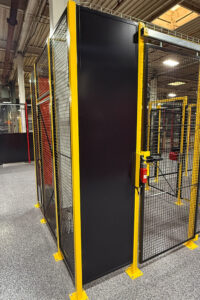
Visibility often drives the decision between wire mesh and solid panels.
Wire mesh guarding allows operators, maintenance teams, and supervisors to see inside the guarded area without opening doors or entering the enclosure. This visibility helps teams monitor production, identify issues quickly, and maintain awareness around automated equipment.
Our RapidGuard® II machine guarding systems use wire mesh panels to provide protection while keeping sightlines open across the floor.
Solid panels block visibility but can help contain specific processes or create visual separation around equipment.
Airflow and Facility Conditions
Facilities also need to consider airflow around machinery. Some applications generate heat and require consistent ventilation to maintain proper operating conditions.
Wire mesh panels allow air to circulate freely through the enclosure, helping support cooling and ventilation around the equipment. This open design also allows lighting and fire suppression systems to remain effective throughout the guarded area.
Solid panels restrict airflow more than mesh systems, which may work better in environments where containment matters more than ventilation.
Containing Debris, Sparks, or Material
Some manufacturing processes create flying debris, sparks, or liquids that require additional containment.
Solid panels often make sense around applications that involve welding flash, grinding debris, coolant spray, or dust generation. In these situations, facilities may prioritize containment over visibility.
Many operations use a combination of both materials. Teams may install wire mesh panels around most of the enclosure while using solid sections near specific hazards.
Access and Maintenance Considerations
Machine guards should allow employees to safely access equipment for maintenance, cleaning, or changeover.
Wire mesh systems typically make it easier for teams to inspect equipment visually before entering the guarded area. Operators can often identify jams, faults, or material buildup without opening a door.
Our RapidGuard® II systems also support hinged and sliding doors with safety interlocks and gate switches, helping facilities maintain safe access procedures regardless of panel type.
Supporting Facility Layouts
The surrounding environment also influences which guarding style works best.
Facilities that prioritize visibility, communication, and open floor awareness often prefer wire mesh guarding. Teams can monitor multiple machines across the floor while maintaining clear boundaries around equipment.
Solid panel guarding may fit better areas where noise reduction, visual shielding, or process containment carry more importance.
Choosing the Right Guarding Strategy
There is no one-size fits all approach to machine guarding. The best solution depends on how the equipment operates, what hazards exist, and how employees interact with the machine.
Many facilities combine wire mesh and solid panel guarding to create a system that balances visibility, containment, airflow, and safety.
Our RapidGuard® II machine guarding systems facilitate the flexibility to build guarding layouts that match the needs of each application and support safer operations across the floor.
To learn more about machine guarding options for your facility, contact a member of our team or request a quote today.
To learn more about WireCrafters, visit www.wirecrafters.com or follow us on YouTube, LinkedIn, Facebook, and Instagram.