An OSHA inspection can reveal machine safety issues that teams may overlook during daily work. A missing guard, an open access point, or a disabled safety device can expose workers to serious hazards.
OSHA requires employers to protect workers from hazards such as points of operation, rotating parts, ingoing nip points, and flying chips or sparks. A strong machine guarding plan can help manufacturers address these risks before an inspection occurs.
Missing or Inadequate Machine Guards
One of the first concerns involves machines that lack proper guards. Workers should not have access to moving parts that could cause an injury.
This includes hazards around conveyors, robotic equipment, presses, and other machines. OSHA requires guarding when machine operation exposes workers to injury.
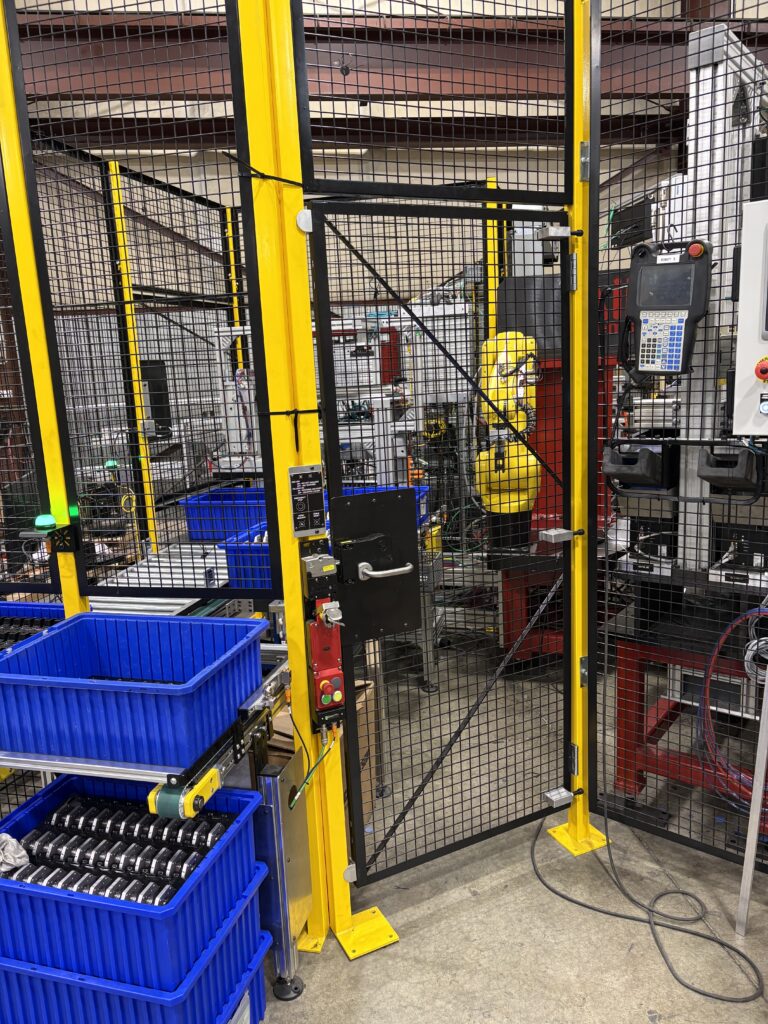
Our RapidGuard® II machine guarding creates a physical barrier around automated equipment and other hazardous areas. Its modular design lets teams build a system around the needs of each application.
Unprotected Points of Operation
The point of operation is where a machine performs work on material. Cutting, pressing, bending, and forming equipment can all create hazards in this area.
OSHA requires employers to guard a point of operation when it exposes a worker to injury. The guard must keep the operator from placing any part of the body in the danger zone during operation.
Facilities should review these areas often. A change in the process or equipment can create a new hazard.
Guards That Workers Can Easily Bypass
A guard cannot protect workers if someone removes or bypasses it.
OSHA requires facilities to secure machine guards so they stay in place. Guards also cannot create a hazard of their own.
Teams should check panels, hardware, doors, and other parts during routine safety reviews. They should also address damaged or altered guards at once.
RapidGuard® II uses a strong panel system to create clear separation around equipment. Teams can also configure doors where workers need safe access for service or maintenance.
Unsafe Access to Automated Equipment
Automation adds another concern. Workers may need to enter robotic cells or other machine areas for maintenance, cleaning, or troubleshooting.
Facilities should control these access points instead of leaving open paths into hazardous areas.
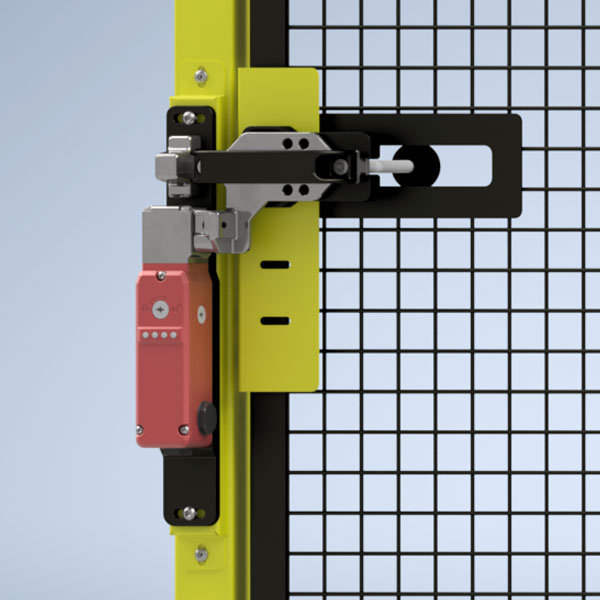
RapidGuard® II doors can work with safety interlocks and gate switches. These devices can connect access points to the machine safety system. This helps facilities manage entry into guarded areas.
Poor Guarding Around the Work Area
Machine safety does not end at the edge of the equipment. OSHA’s machine guarding rule also protects other employees in the machine area.
Look at how people move around each machine. Nearby walkways, workstations, and material staging areas may place workers too close to a hazard.
Our wire partition systems can help facilities separate work zones and control traffic near equipment. This added barrier can keep workers away from areas where they do not need to be.
Ignoring Guarding During Maintenance
Maintenance can change how workers interact with a machine. A guard may need to be opened or removed before a worker can perform service.
Machine guarding and lockout/tagout serve different roles. OSHA requires an energy control program for servicing and maintenance when hazardous energy could injure an employee.
Manufacturers should train workers on both programs. Teams should know when to use guarding and when lockout/tagout rules apply.
Find Machine Guarding Problems Before OSHA Does
Do not wait for an OSHA inspection to uncover a machine guarding problem. Review equipment often and correct hazards as operations change.
Look at points of operation, moving parts, access doors, guards, and the space around each machine. A proactive approach can help protect workers and strengthen your overall safety program.
Need to improve machine safety in your facility? Contact our team to learn more about RapidGuard® II machine guarding and custom guarding options for your application.
To learn more about WireCrafters, visit www.wirecrafters.com or follow us on YouTube, LinkedIn, Facebook, and Instagram.